
What a normal bite looks like
Most insect bites and stings cause a small, raised, itchy lump on the skin within minutes to hours. It might be red, swollen and sore for a day or two, and it can feel worse before it feels better. That's a normal reaction (your body responding to the bite), and it usually clears up on its own within a week or so.
Bites from midges, mosquitoes, gnats and horseflies are the usual summer culprits around here. Stings from wasps and bees hurt straight away and often leave a sharper, more painful spot.
Treating a bite or sting at home
For most bites, simple steps are all you need:
- Wash it. Clean the area gently with soap and water.
- Cool it. Hold a cold, damp cloth or an ice pack (wrapped in a tea towel) on the spot for 10–20 minutes to bring down swelling and itch.
- Raise it. If an arm or leg is swelling, keeping it raised helps.
- Don't scratch. Easier said than done, but scratching breaks the skin and is the main way a harmless bite turns into an infected one. Keep nails short and cover the bite if you can't leave it alone.
- Remove a sting. If a bee has left a sting behind, scrape it out sideways with a fingernail or the edge of a bank card. Don't pinch or use tweezers, which can squeeze more venom in.
Antihistamines: tablets or cream?
This is the question we get asked most at the counter, so here's how we'd steer you:
- Antihistamine tablets are the better all-rounder for the itch. A once-a-day non-drowsy tablet (such as cetirizine or loratadine) works from the inside and is ideal if you've got several bites or the itch is keeping you up. There's a drowsy option too if the itch is worst at night. Always check the label or ask us if you take other medicines or have a health condition.
- Creams and gels work on the spot itself. A soothing option like calamine, or a short course of hydrocortisone 1% cream for the swelling and itch of an insect bite, can be handy for one or two bites in reach. A quick note on hydrocortisone cream: it's for adults and children over 10, not for use on the face, and not in pregnancy without advice, so it's worth a 30-second chat with us first.
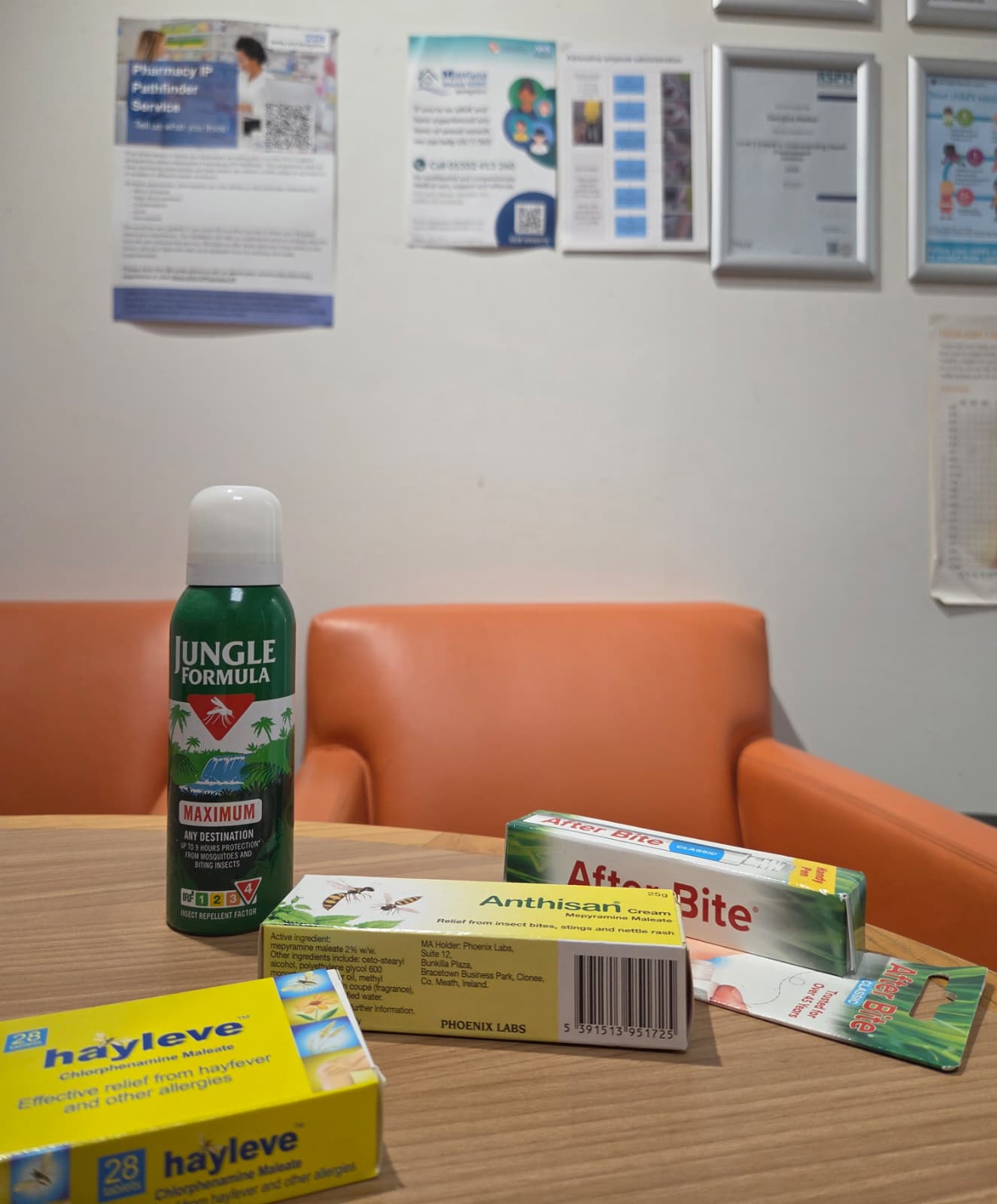
- Antihistamine creams (the ones with an antihistamine in the tube) aren't generally recommended, as they can irritate the skin. For the itch, tablets are the better bet.
You don't need an appointment to ask. Pop in and we'll help you pick the right thing for your skin, your age and any medicines you're already taking. This is exactly the sort of everyday problem our minor ailments service is here for.
Watch for the signs of infection
A bit of redness and swelling is normal at first. But a small number of bites get infected, usually after a few days, often from scratching. Come and see us, or contact your GP, if you notice:
- Redness and swelling that spreads or gets worse after the first couple of days (rather than settling)
- The area becoming hot, increasingly painful or filling with pus
- A high temperature, or generally feeling unwell, shivery or fluey
- Swollen glands in the neck, armpit or groin
An infected bite may need a different treatment, so it's worth getting it looked at rather than waiting. If it's clearly one of the seven common conditions we treat, our NHS minor ailments clinic can often assess it there and then, with no GP appointment needed.
Call 999 or go to A&E if you or someone else has signs of a serious allergic reaction after a bite or sting: swelling of the lips, mouth, throat or tongue; sudden difficulty breathing, wheezing or a tight chest; feeling faint, dizzy or losing consciousness; or a fast, widespread rash. This is a medical emergency. If an adrenaline auto-injector (such as an EpiPen) is available, use it while you wait for the ambulance.
Stop the bites before they start
Prevention beats treatment every time, especially in the woods, near water or out in the garden at dawn and dusk:
- Use an insect repellent on exposed skin. One containing DEET is the most effective. We stock these and can point you to the right strength.
- Cover up with long sleeves and trousers when you're in long grass or wooded areas, particularly in the evening.
- Be careful around flowering plants, bins and food and drink outdoors, which attract wasps. Keep drinks covered.
- If you're heading abroad this summer, some destinations carry a risk of insect-borne illness like malaria. That needs planning ahead, so our travel clinic can talk through bite avoidance, antimalarials and any vaccinations you need, ideally 6–8 weeks before you go.
How we can help
We're a walk-in pharmacy on Church Street. Pop in or call and we can:
- Recommend the right antihistamine (tablet or cream) for you and check it's safe with your other medicines
- Sort soothing creams, repellents and rehydration for summer trips
- Take a look at a bite you're worried about and advise whether it needs more than over-the-counter care
- Help through our NHS minor ailments service, or get you the right onward help if it's more serious
Source: NHS, Insect bites and stings. This article is general information, not a substitute for advice about your own health or medicines, so ask your pharmacist, GP or NHS 111.
← Back to the blog