
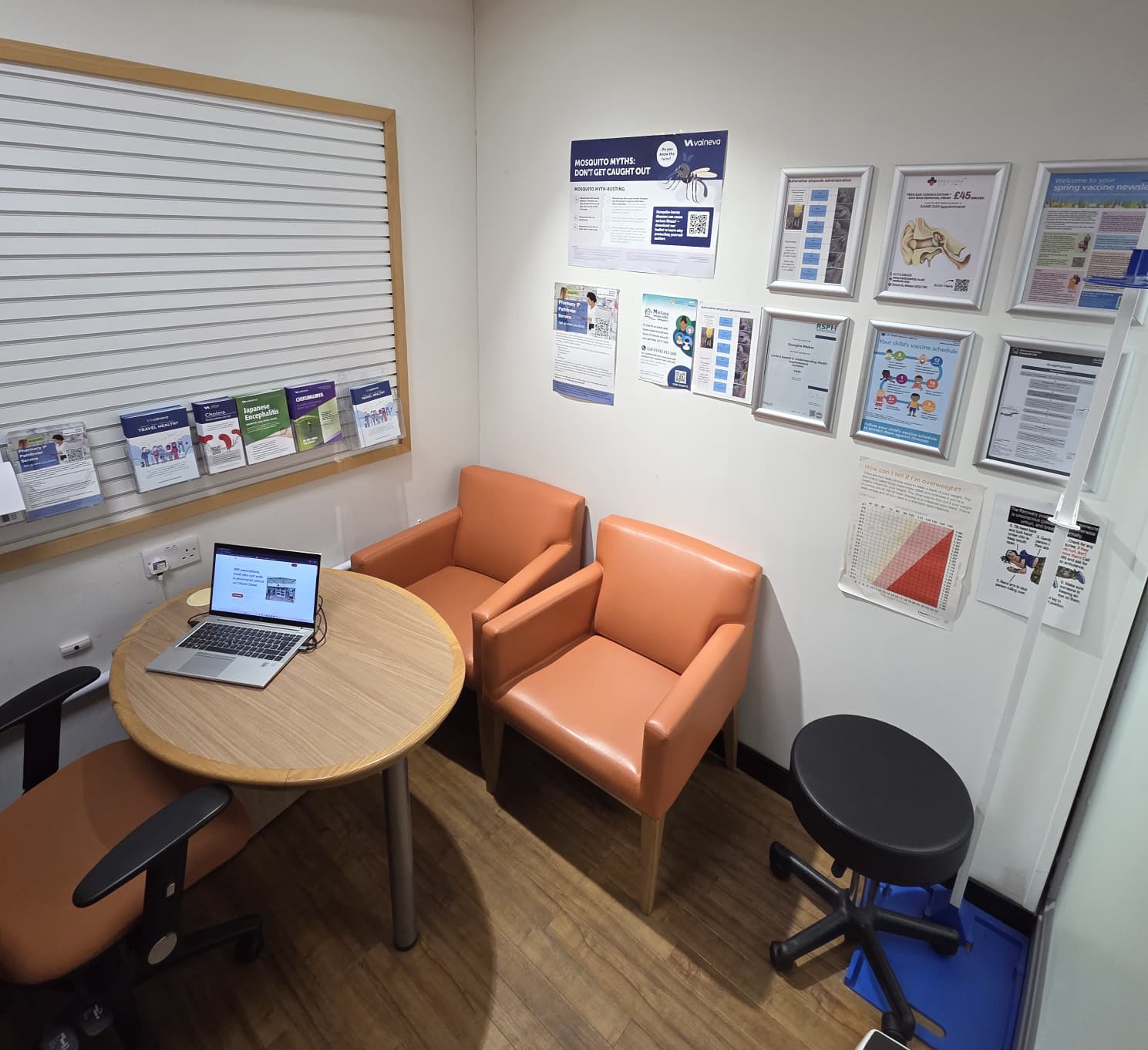
The new NHS MenB vaccination: who can get it, and why it matters.
From 20 July 2026, the NHS is offering a free meningitis B vaccination to two groups of young people: everyone in the current school Year 13, and those moving into university or college accommodation for the first time this autumn. It's being delivered through community pharmacies, and it's a one-off programme with firm deadlines. Here's who it's for, what you'll need to bring, and why both doses matter.
Why this is happening now
Meningococcal disease is uncommon, but when it strikes it moves fast. It can cause meningitis and sepsis, it can leave people with hearing loss, brain injury or amputations, and it is fatal in around one in ten cases.
Group B is the strain behind most cases in England — roughly 83% of confirmed meningococcal infections, with 313 MenB cases recorded in 2024/25. Cases climb every year in October and November, which is exactly when tens of thousands of young people move into halls of residence.
Babies have been offered the MenB vaccine on the NHS since September 2015, and it has cut MenB disease in vaccinated groups by around 75%. Teenagers and young adults were never part of that programme. After the MenB outbreak in Kent earlier this year — the fastest-growing the UK has seen — and a higher-than-usual number of clusters since, the government has commissioned this one-off catch-up for the age groups at highest immediate risk.
Who is eligible
You can have the vaccination free on the NHS if you are:
- In the current school Year 13 — that is, born between 1 September 2007 and 31 August 2008. This applies whatever you're doing next: university, an apprenticeship, work, or none of the above.
- Starting undergraduate university in autumn 2026 for the first time, and born on or after 21 July 2001.
- Moving into further education accommodation or halls of residence for the first time in autumn 2026, and born on or after 21 July 2001.
International students and students from Scotland, Wales, Northern Ireland and the Crown Dependencies who are starting here are included.
Who isn't covered: postgraduates, anyone returning for a second or later year, and anyone under 25 who isn't in the Year 13 age group and isn't starting higher or further education. You also can't have it under this programme if you've already completed a full course of Bexsero, or a full course of Trumenba, in the last five years.
A common mix-up: the Men ACWY jab most teenagers get at school does not protect against group B. They're different vaccines covering different strains. If you've had Men ACWY, you still need this one.
What to bring
If you're in Year 13, you'll be contacted directly by the NHS — through the NHS App, a text, an email or a letter — and you just need to book.
If you're eligible as a university or college starter, you'll need to bring evidence of your place to the appointment. Any one of these works:
- An email confirming your offer from the university or college (usually an .ac.uk address) or from UCAS
- A letter confirming your offer for the 2026/27 academic year
- A screenshot of your offer from the UCAS Hub
Whichever you bring, it needs to show the name of the institution, the course, and that a place has been offered — conditional offers count.
Two doses, and the dates that matter
One dose is not enough. The course is two doses, given at least 28 days apart, and you need both for proper protection.
Two deadlines to plan around:
- Your first dose must be given before 31 December 2026. After that date, no first doses can be given under this programme.
- The service ends on 31 March 2027, which is the last date for second doses.
The sensible move is to book your first dose now and your second before you go. You don't have to have both doses at the same pharmacy — any participating pharmacy can give your second one, so being away at university isn't a barrier.
What the vaccine is, and how it feels
The vaccine used is Bexsero (4CMenB). It's a non-live vaccine, given as an injection into the upper arm.
A sore arm is very common afterwards, and some people get a headache, aching muscles or feel a bit off-colour for a day or two. That settles on its own, and simple paracetamol is fine if you need it. It has a long safety record in the UK — it's the same vaccine given to babies since 2015.
Know the signs, even after vaccination
No vaccine covers every strain, so it's worth every student knowing what to look for — in themselves and in flatmates.
Call 999 or go to A&E if you or someone else has a fever with a severe headache, a stiff neck, dislike of bright light, drowsiness or confusion, cold hands and feet, severe muscle or joint pain, rapid breathing, or a rash that doesn't fade when you press a glass against it. Do not wait for a rash — it appears late, and sometimes not at all. Meningitis and sepsis can go from "off-colour" to serious in hours. Trust your instinct and get help.
The bacteria spread through close contact: kissing, sharing drinks, sharing a vape, and prolonged close contact in shared accommodation. Not sharing drinks and vapes is worth a mention to anyone heading into halls.
How to get it at Medicine Stop
We're on Church Street in Alfreton. You can:
- Book online through the NHS National Booking Service, or on our booking page
- Walk in during our advertised clinic times
- Call us on 01773 836328 if you're not sure whether you're eligible
Bring your evidence of your university or college place if that's the route you're eligible by. If you're not sure whether what you've got counts, ring us before you come — it's a 30-second conversation and it saves a wasted trip.
Parents: if your son or daughter is in Year 13 and hasn't got round to booking, this is a good one to nudge them on before they leave home.
Sources: NHS England MenB vaccination service specification and UKHSA guidance on the time-limited MenB offer. This article is general information, not a substitute for advice about your own health or medicines, so ask your pharmacist, GP or NHS 111.